Why Do Ambitious and Creative People Fail?

In today's newsletter:
- Why do ambitious and creative people fail?
- Email for more opportunities and better health
- How lighting affects your mood
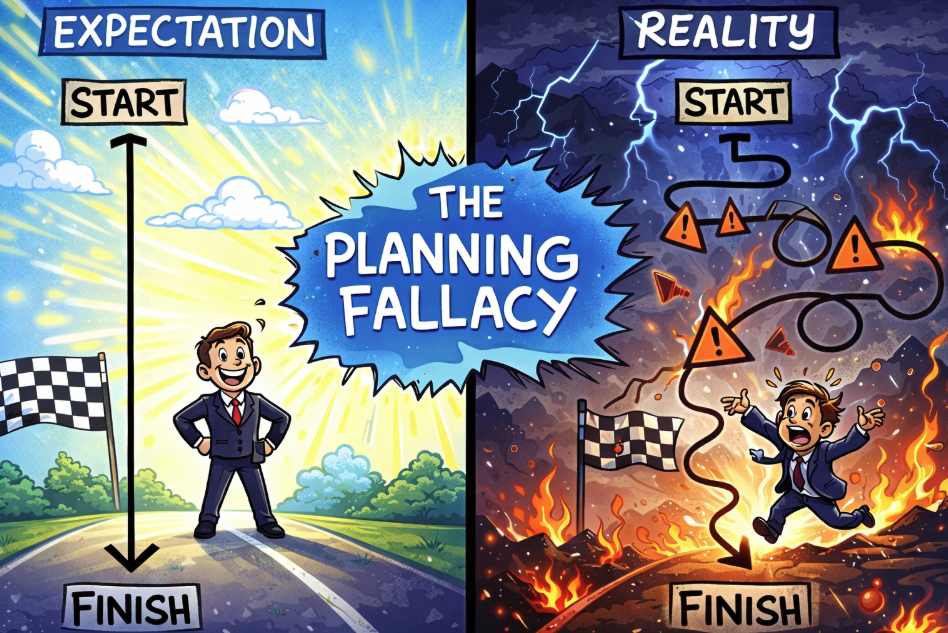
Ever wonder why ambitious and creative people fail? It’s often because of something called the planning fallacy. This is when the brain underestimates how long things take.
In your professional and personal life, your mind naturally plans for best-case scenarios and ignores delays, stress, or mistakes. As a result, you overpromise and overwork. This happens even when you’re aware of it.
Want to fail less? Assume everything takes longer than expected. Double your timeline, cut plans, and commit to fewer things.
Do this and your plans will fit real life better and you’ll feel less stress.
Email for More Opportunities and Better Health
Here’s how to use email to create more opportunities and support a healthier way of working:
Write with empathy.
If you believe a company could benefit from your services, identify the decision-maker and send a thoughtful, human email. People don’t read emails mechanically, they read them emotionally. Try to understand what they may be struggling with, where they feel stuck, or what they want to improve. Share briefly how you’ve helped others solve a similar problem.
This approach increases your chances of getting a response, builds a positive outreach habit, and encourages more mindful, sustainable work, while opening the door to new opportunities.
How Lighting Affects Your Mood
Sunlight through your windows quietly controls more than you think. It tells your brain when to wake up, when to focus, and when to slow down. When that light hits at the wrong time or in the wrong amount, your energy, mood, and sleep all take the hit, especially at home or in the office.
Automated window shades, blinds, and curtains fix that without you micromanaging it. Morning light can be let in where you work, harsh glare can be blocked automatically when the sun shifts, and rooms can darken on their own in the evening so your brain isn’t stuck in day mode at night.
This isn’t about comfort or aesthetics, it’s about removing friction between your environment and your nervous system.
When light is handled for you, your brain stops fighting the room you’re in. Not automating your blinds yet? Check out the RYSE SmartShade.
Disclaimer: This newsletter is for informational purposes only. Details may change or come from third-party sources; always do your own research and consult a qualified professional before making decisions.